Is Video Game Art a Visual and Performing Art
One of the exciting fine art explorations which came out of the digital civilisation is video game art, an interesting form of interactive computer art based on video game designs. From the dawn of estimator culture, which adult behind closed doors at MIT and Section of Defence force in the Usa in the eye of the 20th century, artists around the earth have followed closely and with interest the possibilities of emerging technologies, whether we are talking about the Net, virtual reality, AI or biotechnology. Information technology was no different with the diverse and successful world of videogames; this huge gamer industry amounted to sixty billion dollars a year in 2012, steadily growing until today, and gave birth to pop subculture of millions of true-blue followers with a rich world of festivals, sporting events and online communities, pushing the possibilities of technology ever further. What near people see as simple leisure activity inspired artists to once again put to question the very meaning of Art.
But video games accept 1 more significant connection with digital fine art, and that is the experimentation with human being-computer interface, interactivity and aesthetics of figurer image, which contemporary forms of interactive art adopted and continued developing later on. Nosotros will explore how famous arcades like Space Invaders and Super Mario Bros, first-person shooter games similar Quake and Doom, early on adventures like The Legend of Zelda, but also the Massively multiplayer games (MMOGs) and Massively multiplayer online role-playing games (MMORPGs) like Second Life and The World of Warcraft provided a base for creative performances, original forms of game pattern and interesting possibilities for collaboration and communication.

What is Video Game Fine art ?
So what exactly is video game art? And how is it dissimilar from the massive artistic production of games already considered art in its own right? Although there are many sources online that testify u.s.a. a rich visual art and prints depicting gaming culture, video game art is something entirely different. Though the first work to belong to this genre was Moondust from 1983, it was the 1990s when art producers started experimenting with reckoner and internet engineering science in larger numbers. Video game art adult every bit a subgenre of new media art, tied closely with cyberspace fine art, interactive and software art, every bit well equally virtual communities popular in the last decade of the 20th century. These artists use code, gameplay and interactive design tools to provoke a reaction and communicate their ideas, and in this sense, video game art, like nearly new media art, found its precursors in the great advanced and conceptual art movements. For its serious intent, such artwork is also recognized by thriving serious games industry equally its own subgenre - that of Fine art Games, stressing activist and educational aspects of artworks.
Post-obit the variety of game types already existing, video game fine art includes several distinct forms. Most common are possibly the pieces which present ether original game design or re-create existing video games, usually classic works like Infinite Invaders from 1969, or 1985 Nintendo Super Mario Bros. Also found often are the so-called Mods or artistic modifications of video games. Hither, artists utilize coding skills to exit their mark within games, making changes to the design commonly with some critique in heed. In a similar way, some use their skills to create pieces which are performances in gamespace. Usually being staged in popular multiplayer games like Second Life, performers transform the player community into an audience for their projects.
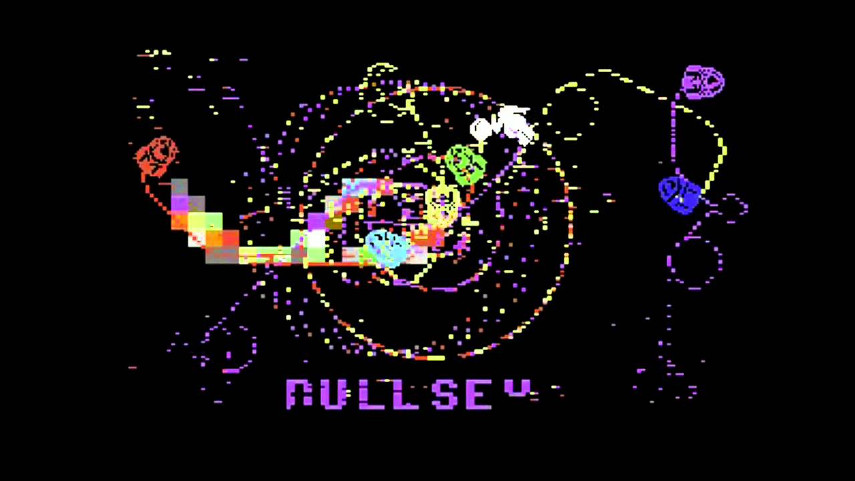
Artists Making Video Games
The reason art creators were attracted to video games in the first identify was their ability to broaden storytelling - getting the opportunity to appoint the viewer in a truly active manner and at the same time controlling their experience. By entering the gamespace, the player is generally diverged from traditional goals, similar passing to another level, or merely having fun. This is maybe the crucial difference between video game art and gaming in general. Everything in a video game artwork is designed to inspire u.s.a. to think, to question what we feel and why, both within the gaming civilization too equally out. In virtually cases they await quite different than what we imagine when talking near video games in 2017. Creating commercial games is a serious business, with entire armies on the payroll and months of product, while creating video game artwork is unremarkably a small affair, happening on home computers within small teams.
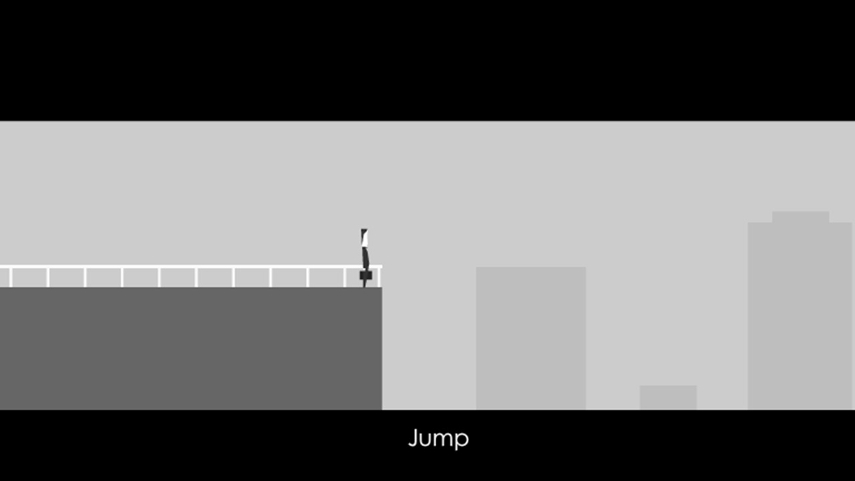
Women Artists in the Earth of Gaming - Natalie Bookchin's The Intruder
Brooklyn-based artist Natalie Bookchin'due south internet based work titled The Intruder was created in 1999, based on a story by Argentinian writer Jorge Luis Borges of the same name. Her interactive narrative game is conceived equally a feminist critique, irresolute Borges's text and then that the woman is seen as an intruder in a man-made earth, just too in the gaming sphere. Taking us through ten curt archetype videogames like to Pong, Space Invaders and onetime Atari and Nintendo arcades, throughout some 15 minutes gameplay the accent is put on uncovering the narrative, making playing secondary to the experience.
Natali Bookchin – The Intruder (Documentation), 1999
Radical Games of Paolo Pedercini – Molleindustria
Italian artist Paolo Pedercini's project The Molleindustria introduces a phone call for re-articulating popular gaming culture every bit radical social action through a concept of Soft Industry, as a call to arms against contemporary entertainment industry. Starting from 2003, the artist has been presenting serial of simple, notwithstanding authentic gratis online videogames for Mac, Windows and Linux, designed to tackle a specific social issue: Nova Alea, a game most cities and those who rule them, Oligarchy, on the night issues of oil drilling, or The Free Civilization Game which invites us to help defend freedom of noesis in the age of copyright. Like many other creatives in reckoner-based fine art, Pedercini doesn't really see his work equally Art per se, merely cantankerous-pollination of worlds inviting discussion and action on social and technological problems.

Mods - Artistic Modification of Video Games
Ane especially interesting form of video game art drove artists into a conceptual re-cribbing of already existing gamespace. Mods or modifications refer to visual and narrative changes inserted in games via patches, pieces of software unremarkably created by programmers for the purpose of fixing or improving the game. In the context of video game art, these extensions allow players to bask unlike gameplay, whether past creating elementary character skins or producing brand-new games by altering the code of the original. These kinds of interventions were already a pregnant role of the gaming subculture, prominent in games like Half-Life, Minecraft and One thousand Theft Auto. Through game modifications, artists plant means not only for disseminating their ideas, but for using virtual environments to frame those ideas equally well.
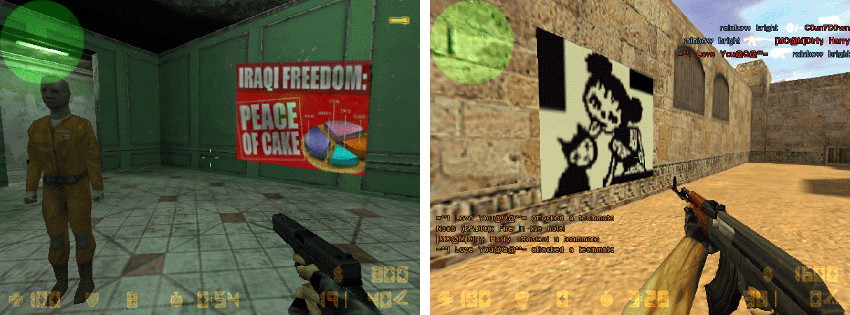
Artists in War Against Aggression – Velvet-Strike
The about famous creative modification was a commonage action by Anne-Marie Schleiner, Brody Condon and Joan Leandre, in a patch of popular kickoff-shooter multi-player game Counter-Strike (2000) titled Velvet-Strike . Released in 2002, shortly afterwards nine/xi, the modification allows the thespian to spray anti-war graffiti on any wall in the game. Formulated as a critique of George W. Bush's State of war against Terrorism, information technology calls on player community to straight involve themselves and invites others to question the ideologies of capitalism, race and gender behind the famous military strategy, reflecting the very existent assailment all around u.s.a..
Edifice a New Civilization – Eastwood - Real Time Strategy Group Civilization Series
One characteristic of computer art creators is that they themselves don't perceive their work as only art, or merely games, only they wield these mechanisms to express themselves and create visions of different possible worlds. Eastwood - Real Time Strategy Group is 1 such commonage, researching through games and playing with important problems of today. Their series of total modification was in the turn-base strategy video game Civilization (1991), a game universe which enables players to develop their own civilisation through the ages. Eastwood'due south Kristian Lukić, Vladan Joler and Zvonko Gorecan bring us a series of original gameplays adult over a decade, illuminating major power plays in global social club and how they affect united states of america. Their first patch, Civilization IV – Age of Empire was created in 2004 for the Dutch Electronic Art Festival which, alluding to another classic strategy Age of Empires, presents us with a nowadays-day purple battle of It corporations dealing with new economy, dissimilar industries, surveillance, terrorism etc., instead of different countries contesting for the survival of their culture. The second office of the trilogy, the 2008 Civilization Five – Historic period of Love, foreshadows a battle for dominance of Web 2.0 social magnates similar Google and Facebook, offering players marketing techniques to win, while the latest patch from 2015, Civilisation VI – Historic period of Warcraft, involves u.s.a. in problems of cyberwar and surveillance.
Civilization VI - Age of Warcraft Gameplay by egonston
Art Performance and Video Games
In the abundant gaming earth, artists take establish meaning inspiration for their interventions, but some of them saw these virtual spaces every bit a phase for their art, and its virtual inhabitants - their audience. Without the advanced technological savvy, many found online virtual worlds, MMOGs and MMORPGs similar Second Life and Earth of Warcraft, undiscovered and unperturbed social spheres getting inquisitive about their norms and connections to the offline world. By marrying performance art with video games, artists started creating site-specific online performances, introducing fine art to sometimes utterly unprepared worlds.
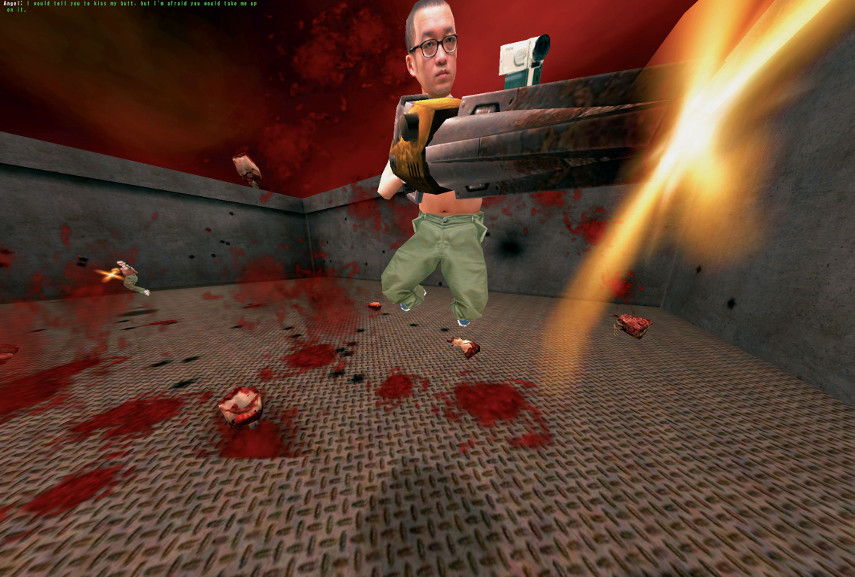
Star Expedition and Verse - Joseph Delappe'southward Howl: Elite Force Voyager Online
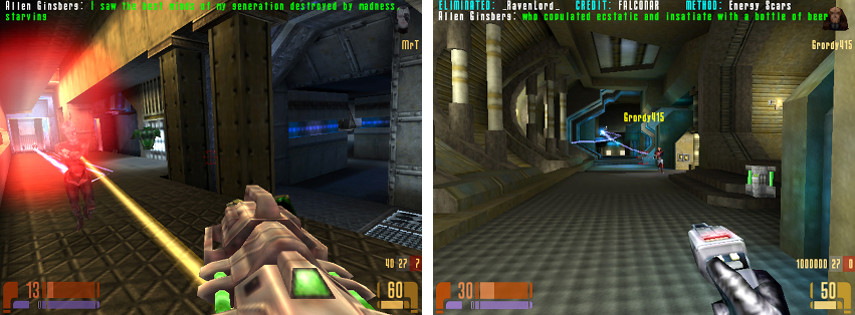
San Francisco-born creative person and Media Studies Professor from Nevada, Joseph DeLappe is considered a pioneer in online gaming operation. His 2001 project Howl: Elite Force Voyager Online was what he defines as a cyber street functioning in Star Trek: Voyager – Elite Force, a get-go-person shooter multiplayer online game set in cult TV show Star Expedition universe. DeLappe staged his work with idea of reaching an audience outside fine art earth, merely likewise solving the issue of isolation he felt in the Nevada desert. He entered the gamespace with an avatar named Allen Ginsberg and performed a six-hour reading of the author'due south celebrated shell poem Howl using the game's conversation system, putting to question the very significant of culture in computer age.
Fine art and Second Life
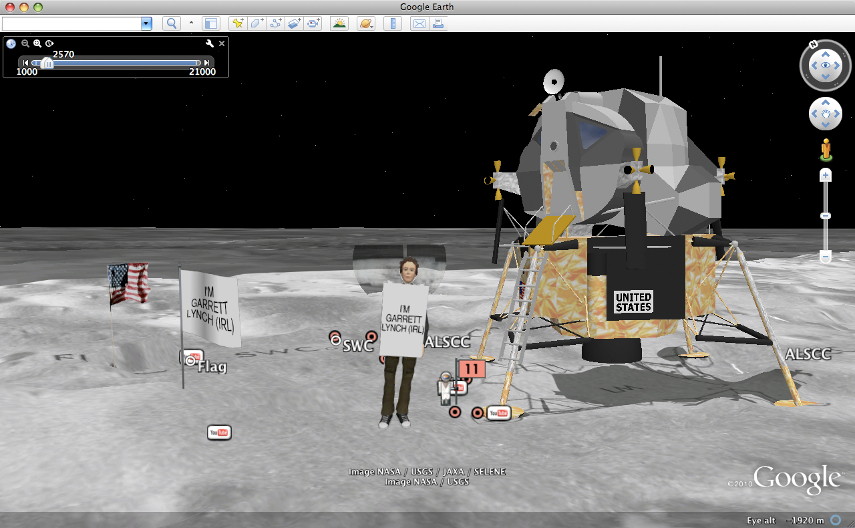
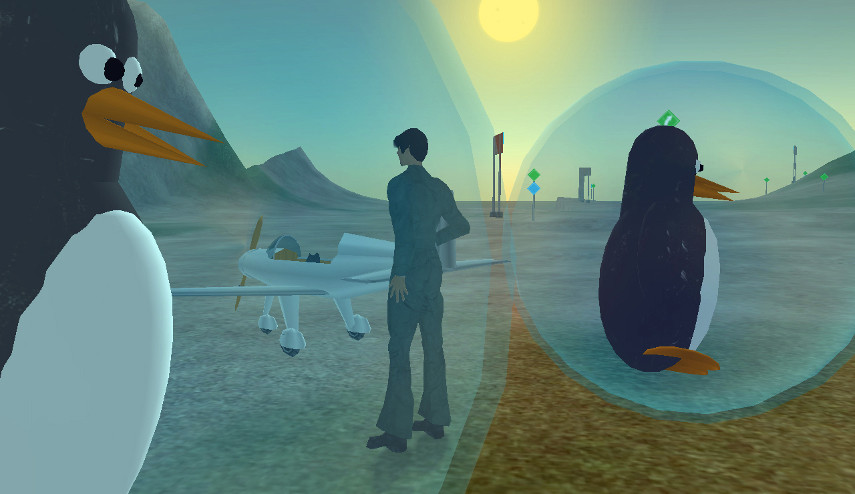
The virtual world which attracted performers the most has e'er been and remains 2d Life (2003). Not exactly a videogame but a Multi User Virtual Environment (MUVE), the platform provides its millions of residents a sort of virtual reality replica of everyday man life, and and so presents a brand new stage for all kinds of artistic endeavors. Second Life's art world is filled with galleries, exhibitions, live concerts and theater productions, just equally its offline analogue. An interesting form of artwork, which developed in online gamespaces, is machinima, a cinematic production of existent-fourth dimension staged gameplays, a sort of brusque blithe films adult in the game universe. Still, it is as well performance art which draws much attention in Second Life. Active performers include Annabeth Robinson, Garrett Lynch, Simon Goldin and Jakob Senneby, Gleman Jun and 2d Front. These men and women explore the relation between real and virtual, bureau of virtual identities and potency of online communities.
Aren't Video Games Already Art?
Every bit we take seen, video game art disturbs the already eroded borders of contemporary art, making it difficult to differentiate betwixt game, artwork, activism and everyday life in our more and more than technologically oriented reality. Merely aren't video games already art? These grand production pieces, paralleled only by the great movie industry, gave united states of america astounding visual blueprint in Concluding Fantasy, singular landscapes and cityscapes of the BioShock series and many others. Game art prints of such works are sold and sought afterwards around the world, responding to a demanding new generation of audience. Also, narrative and character development is reaching college levels every yr, providing interactive storytelling opportunities literature never could. The problem is that while video game art pieces are in near cases created and presented within the world of fine art and its institutions, video games still largely persist in their reputation of lowly entertainment. While k video game productions are often limited by industry requirements, creative person who is experimenting with game design remains free to answer to social appetite of contemporary fine art and explore the workings of new engineering. Nonetheless nosotros remain convinced that it won't exist long until we openly celebrate the wealth of this creative wonder.


In his volume,Works of Game: On the Aesthetics of Games and Art, John Sharp describes three communities of practice and offers case studies for each. Game Art, which includes such creatives equally Julian Oliver, Cory Arcangel, and JODI (Joan Heemskerk and Dirk Paesmans) treats videogames as a form of pop culture from which tin exist borrowed bailiwick matter, tools, and processes. Artgames, created by gamemakers including Jason Rohrer, Brenda Romero, and Jonathan Blow, explore territory normally occupied by poetry, painting, literature, or picture. Finally, Artists' Games - with artists including Blast Theory, Mary Flanagan, and the collaboration of Nathalie Pozzi and Eric Zimmerman - represents a more constructed conception of games as an artistic medium. The piece of work of these gamemakers, Sharp suggests, shows that it is possible to create game-based artworks that satisfy the aesthetic and critical values of both the contemporary fine art and game communities.
References:
- Sharp, J., Works of Game: On Aesthetics of Games and Art, The MIT Press, 2015
- Paul, C., Digital Fine art, Thames & Hudson, 2008
- Greene, R.,Cyberspace Art, Thames & Hudson, 2004
- Brittanti, Grand, Quaranta, D., Gamescenes: Art in the Historic period of Videogames, Mailand, 2006
Featured images: Super Mario Bros, photo by Matt Ley, Brody Condon - Adam Killer, 2000-2002, photo via theinfluencers.org, Eva and Franco Mattes - Colorless, Odorless and Tasteless, 2011, photo via 0100101110101101.org, Ian Bogost - Moo-cow Clicker, 2010, photograph via polygon.com, Thomson & Craighead - Trigger Happy, 1998, photograph via birminghammuseums.org.u.k.. All images used for illustrative purposes only.
Source: https://www.widewalls.ch/magazine/video-game-art
0 Response to "Is Video Game Art a Visual and Performing Art"
Post a Comment